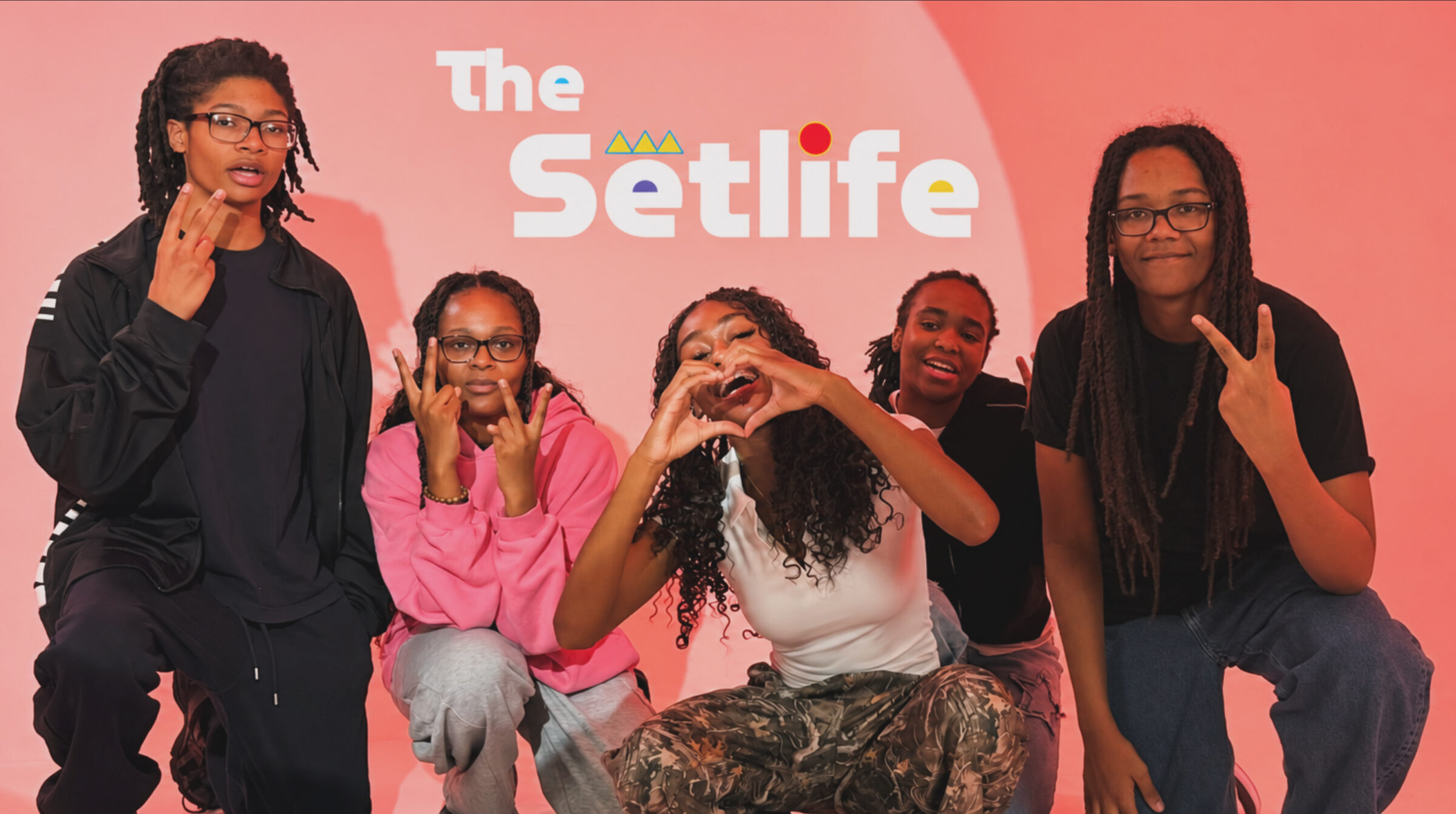
The first sound of The Setlife Project was not the snap of a slate or the rolling of a camera. It was a voice reading from a page.
We recently completed our first table read and rehearsal—a modest beginning, perhaps, but filmmaking has always depended on these quiet moments before the lights arrive. A script is read aloud. Characters begin to breathe. Performers discover where the words sit naturally and where they resist. Crew members listen as a story that once existed privately on the page becomes something shared, something collective, something suddenly moving toward the screen.
In many ways, that first reading revealed the entire idea behind The Setlife Project.
Before there is a finished film, there is a room of people learning how their work connects. Before there is an audience, there is trust. Before anyone calls action, everyone has to understand where they stand—and why their place on the crew matters.
The film set is the classroom.
Before the set comes to life
From the outside, a film set can feel impenetrable. It has its own language, its own rhythm, and an entire network of jobs many people never encounter until they are somehow expected to understand them. There are call sheets and camera reports, marks and martinis, department heads and production assistants, each moving within a system that can appear almost ritualistic to anyone watching from beyond the frame.
For a young filmmaker with talent but no direct path into production, that distance can make the industry feel less like a place to begin and more like a room they were never invited to enter.
The Setlife Project exists to shorten that distance.
Based in Arizona, The Setlife is a hands-on film education pathway for emerging Black filmmakers and creatives of color. Participants do not merely hear about filmmaking in theory; they begin learning how a production works by stepping into real roles, making decisions together, solving problems, and completing work they can see and share.
Our first table read and rehearsal placed that principle into motion. The script gave us a common destination, but the room gave us the beginning of a crew. Questions could be asked. Ideas could be tested. Performers could hear one another. Responsibilities that appeared separate on paper began revealing how deeply connected they would become in practice.
You see, a production begins long before anyone presses record.
Learning by making
Film production is collaborative by design. A director may shape the vision, but that vision remains imaginary without the cinematographer who interprets it, the assistant director who protects the day, the camera team that captures it, the grip and electric departments that give it form, the performers who embody it, and the production crew holding everything together just outside the frame.
Remove one piece and the entire image changes.
The Setlife introduces young creatives to that larger system through roles such as directing, assistant directing, cinematography, assistant camera, grip and electric, production assistance, performance, and the many other responsibilities that shape what happens before, during, and after the camera rolls. Participants learn the vocabulary of the set, but more importantly, they begin to understand why each role exists and how one department’s choices affect everyone else.
That distinction is essential. Knowing the name of a job is not the same as understanding the work.
You can explain a call sheet, but its purpose becomes clearer when a crew depends on it. You can describe continuity, but the lesson sharpens when two shots refuse to cut together. You can talk about sound, safety, preparation, and communication for hours, yet each idea gains new weight when a real production is waiting on the other side of the decision.
The Setlife is built for that moment—the space where information becomes practice and practice begins turning into instinct.
A place to begin
Creative potential does not always arrive with a polished résumé, expensive equipment, or a network of industry contacts. Sometimes it begins with a phone camera. Sometimes with an unfinished script, an interest in acting, a fascination with lighting, or the simple desire to understand what happens behind the scenes.
Sometimes it begins at a table, reading the first page.
The Setlife makes room for that beginning. No perfect résumé is required. Participants are expected to learn, contribute, ask questions, and take the work seriously, but they are not expected to arrive already fluent in a system they have never been given the chance to enter.
The goal is not to pretend that one project can teach everything about the film industry. It cannot. The goal is to create an honest first production experience—one that gives emerging filmmakers a clearer understanding of the craft, a respect for the collaboration it demands, and a stronger sense of where they might belong within it.
That experience changes the questions a young creative is able to ask. Instead of wondering vaguely how movies get made, they can begin asking which lens serves the scene, why sound needs protection, what the assistant director is tracking, how lighting changes emotion, or how an editor creates rhythm from moments filmed hours apart.
The industry becomes more legible because they have participated in the process.
Building pathways for Black storytellers in Arizona
Arizona has creative talent. What it needs are more durable pathways connecting that talent to education, tools, collaborators, and the opportunity to practice.
For Black filmmakers and other historically excluded creatives, access cannot be reduced to visibility alone. Being seen matters, but so does being prepared. So does understanding the work. So does having a place to develop skills, make mistakes, build relationships, and finish projects without being asked to shrink the ambition or cultural specificity of the stories being told.
The Setlife is one contribution to that larger infrastructure.
It is designed to help young creatives see themselves not only as an audience for film and television, but as the writers, directors, cinematographers, performers, technicians, producers, and world-builders capable of shaping what comes next. That shift—from watching the image to understanding how to make it—is where possibility begins taking material form.
From a local set to a worldwide classroom
The Setlife is rooted in Arizona, but the educational opportunity does not end at the edge of a physical set.
YouTube and social media will allow us to bring the production process, our local film community, and the work being created here to a worldwide audience. This is not simply promotion attached to the project after the interesting work is over. Distribution is part of the educational model itself.
The finished films can show what participants created. Behind-the-scenes material can reveal how departments collaborate. Short demonstrations and crew-role features can make production knowledge easier to understand. Reflections can preserve lessons that might otherwise remain inside one rehearsal room or disappear at the end of a production day. With the appropriate permissions in place, these platforms can also introduce audiences to the filmmakers, artists, technicians, educators, and organizations already contributing to Arizona’s film culture.
In effect, The Setlife creates two connected classrooms.
The first is the production itself, where participants learn by doing. The second gathers around the work online: aspiring filmmakers who may be far from Arizona, but can still learn from the questions, solutions, mistakes, and discoveries that shaped each project.
Social media gives individual lessons room to travel in immediate, accessible forms. YouTube can hold the deeper archive—finished productions, longer conversations, practical demonstrations, and behind-the-scenes stories with enough space to breathe. Together, they allow local work to become a growing public resource rather than a moment that disappears when production wraps.
The reach may be worldwide, but the point of origin remains visible: young creatives, working together in Arizona, learning how to bring an idea into the world.
The work beyond the first read
Every Setlife production will be both a finished creative project and a record of the learning that made it possible. Our first table read and rehearsal now form the opening chapter of that record—not because every moment needs to become content, but because sharing the right parts of the process can place useful knowledge into someone else’s hands.
This Journal will document parts of that journey. Some entries will examine specific crew positions. Others will share practical tools, production lessons, and perspectives on building more accessible pathways into filmmaking. The aim is to make the knowledge useful without pretending the work can be reduced to a checklist.
The Setlife begins with practice, but its horizon is larger: a creative community with the confidence, language, relationships, and production experience to make ambitious work on its own terms—and a public platform capable of carrying that work beyond Arizona.
The first sound was a voice reading from a page. Soon there will be cameras, lights, mistakes, discoveries, performances, finished scenes, and an audience on the other side of the screen.
But first, there was a room. A script. A crew taking shape.
The work had already begun.